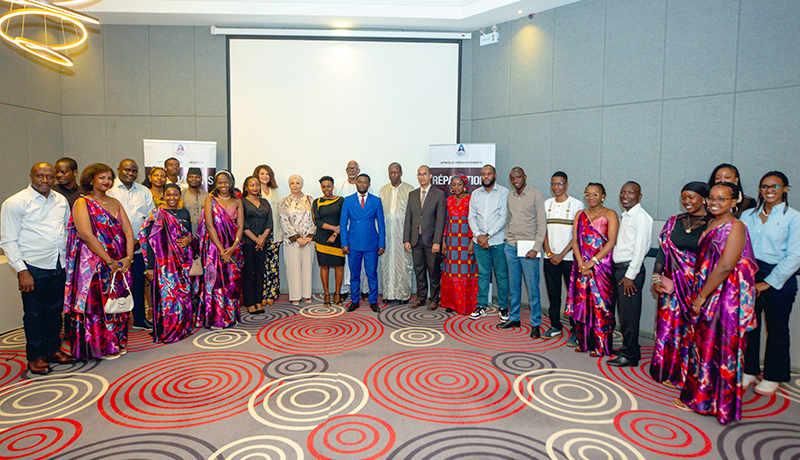
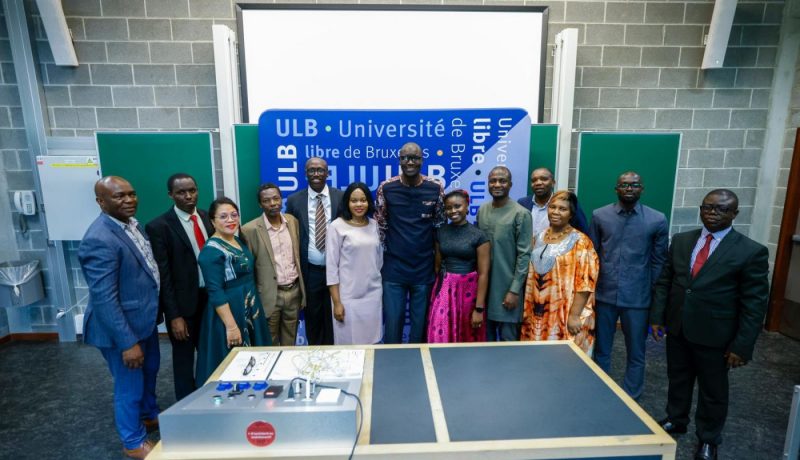
Through proper reporting, investigative techniques, and creativity, journalism and media can be powerful tools in building peace and accountability in conflict situations. This has been analyzed during 2012 Media workshop about conflict reporting and international justice held at Top Tower Hotel in Kigali – Rwanda on 29th October to 1st November 2012.
<doc5936|left>‘Media plays a significant role in conflict situation’ says Rosemary Tollo, Kenyan Journalist specialized in justice issues. She goes on saying the previous genocide in Rwanda and the Kenyan cases show there was a direct link between the media, genocide and mass killings.
As it was mentioned on the genocide memorial, Hassan Ngeze, house owner of Kangura newspaper bore the greatest responsibility for the dissemination of the information that contributed to the genocide.
“We…. Say to the Inyenzi (the cockroaches) that if they lift up their heads again, it will no longer be necessary to go fight the enemy in the bush. We will … start by eliminating the internal enemy … they will disappear,” says Hassan Ngeze, in Kangura Newspaper, January 1994. About this only dissemination information, the genocide resulted in over one million people killed, thousands of orphan children, raped and mutilated women.
On the other hand, continues Rosemary Tollo, Joshua Arap Sang, a former radio broadcaster for KASS FM stands accused of crimes against humanity, for his role in perpetuating ethnic tensions and violence through his radio shows.
To this end today’s meeting is themed on the role of media in conflict, says Jack Muriuki, the ICJ Kenya, and especially on reporting on conflict.
“Over the last 20 years, there has been, and continues to be, huge amounts of violence and conflict in Africa. Often, media has been used to perpetuate and incite violence,” adds Muriuki.
It is on the basis that the ICJ Kenya seeks to provide comprehensive training and capacity building on the international criminal justice issues for emerging and establishing leaders working in Media and journalism in Eastern Africa.
Burundi, Rwanda, Democratic Republic of Congo, Tanzania, Kenya, Uganda, Sudan and South Sudan with the partnership of Eastern Africa Human right civil Society had been taking part in the workshop.
“Eastern Africa journalists raised same issues”
During the session, different presentations were coming back to highlight different challenges faced by journalists in reporting in conflict situation. “No access to information, lack of capacity, insecurity, intimidations, no inherited experience in reporting on the conflict situation, professionalism, lack of the media advocacy are some issues faced by journalists” says Faisal Elbagir, journalist for human Right, JHR, from Sudan.
According to Robert Mugabe, Rwandan journalist, as regards what happened in Rwanda, some challenges need to be resolved.
“Much attention is needed regarding media reforms, journalist training is essential, supporting media associations, strong partnership between media and civil society,” wishes Mugabe.
In his view, the Rwandan Media is diverse and liberalized with print, radio, online prominent and vibrant-depends on who you ask- obviously the ability of the media to critique the status quo is limited. Most media is government controlled or pro-government.
The official narrative always dominates regardless of facts
The need to be responsible as the country worked hard to build reconciliation and national unity specifically to de-emphasize ethnicity in public life meant the media has had to tow a fine line,” explains Mugabe.
According to him, society seems willing to allow, certain controls so as to avoid the mistakes of the past. For instance, he says, tough anti genocide laws [against ideology, denial, revision] have directly affected media.
“The power of the Media to destroy and create”
According to Joshua Lam, ICJ Kenya, incitement to commit genocide requires a calling on the audience (be they listeners or readers) to take action of some kind. Absent such a call, inflammatory language may qualify as hate speech but does not constitute incitement. In many jurisdictions hate speech itself has been criminalized.
“The power of the media to create and destroy fundamental human values comes with great responsibility. Those who control the media are accountable for its consequences. – ICTR Media case,” says Joshua.
“But”, he adds, “More importantly, we believe that. Therefore, the overall objective of this conference is to discuss the role of media in conflict and to look for tools and opportunities to transform the media into leading the way towards peace and justice”.
“The idea of the establishment of a permanent international criminal court to deal with cases relating to gross human rights violations was well received and supported by African States,” clarifies Lam.
As well the members coming from the Eastern Africa having experienced the same background of violence were convened to fight against impunity in building peace in their respective countries. But regarding different difficulties they are facing during reporting, journalists from those countries condemn and request liberation of some colleagues who are arrested and imprisoned because of their job, to be liberalized. Notably Hassan Ruvakuki from Burundi, Patrice Palata from DRC, Sosthene Kambidi and Kasongo Fortunat from DRC who were arrested and condemned.
Under the theme “promoting peace through accountability,” and regarding what happened in Africa due to dissemination of information, journalists from Eastern Africa converged on building their countries by contributing to fight impunity.